About Robotic Testing Solutions for Physical Devices
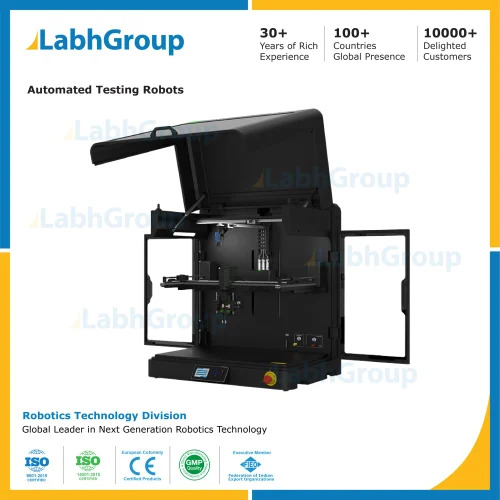
Experience the latest in elite testing technology with our hot-selling Robotic Testing Solutions for Physical Devices. Engineered for peerless reliability, these prodigious systems offer a top-notch test force range of 0.5 - 1000 N, ultra-precise speed control from 1 to 800 mm/s, and a full suite of specialized end effectors, including stylus, grippers, and tappers. Advanced multi-axis articulation, 360 rotation, and superior sensor integration ensure impeccable durability, reliability, and performance testing. With automated, computer-controlled operation, trend-based QC, and extensive connectivity, these precision robots are indispensable for manufacturers and suppliers who demand the best.
Directions and Application Areas for Robotic Testing
Robotic Testing Solutions for Physical Devices are operated by configuring test parameters and attaching the appropriate end effector for the specific task. Ideal for use in quality control labs, manufacturing environments, and R&D facilities, these systems evaluate durability, reliability, and functional performance of products. They are suitable for a wide variety of surfaces, including plastics, metals, and composites-ensuring comprehensive evaluation across multiple application areas in industrial and commercial settings.
Samples, Certifications, and Payment Terms
Sample units of these robotic solutions are available upon request to help prospective buyers understand the system's full capabilities before a major outlay. Certified to align with essential international standards, each unit is backed by robust documentation and QC records. Payment terms are negotiable, and transparent list prices are provided. Our efficient goods transport channels ensure prompt, secure delivery, offering peace of mind to exporters, manufacturers, and suppliers across India and beyond.
FAQ's of Robotic Testing Solutions for Physical Devices:
Q: How does the Robotic Testing Solution enhance physical device durability testing?
A: The solution utilizes adjustable test force, multi-axis movement, and precise end effectors to simulate real-world stresses, enabling comprehensive evaluation of device durability under different operating conditions.
Q: What industries benefit the most from deploying these test robots?
A: Electronics, automotive, consumer products, and industrial equipment manufacturers gain significant advantages, as the robots streamline functional, reliability, and endurance testing for their products, ensuring enhanced quality and performance.
Q: When should a manufacturer consider using robotic testing over manual testing methods?
A: Robotic testing should be used when high precision, repeatability, trend analysis, or large-scale reliability testing are essential. It is ideal for automating repetitive or complex tasks that are challenging to perform manually.
Q: Where can these robotic testing systems be integrated within production facilities?
A: These systems can be seamlessly integrated into quality control labs, production lines, and R&D testing zones, thanks to their flexible control options and compact, modular design.
Q: What is the process for setting up and controlling the robotic test system?
A: Setup involves connecting via Ethernet/IP, Modbus, Profinet, USB, or Wi-Fi, calibrating the sensors, and selecting the required end effector. Operation is managed via computerized industrial test automation controllers, ensuring ease of use and reliability.
Q: What are the key benefits of real-time monitoring and trend analysis in these systems?
A: Real-time monitoring offers instant data feedback, enabling immediate detection of anomalies, while trend analysis supports proactive quality improvements and more informed decision-making in the manufacturing process.














 Send Inquiry




 Send Inquiry

 Send Inquiry
 Send Inquiry
 Send SMS